Key Takeaways
- Penile ligamentolysis releases the suspensory ligament, allowing more of the internal shaft to become visible and increasing flaccid length.
- Erect length change is typically minimal unless you follow a structured traction protocol post-operatively.
- Recovery means downtime. Swelling and a change in the erection angle are normal.
- Lengthening candidates need realistic goals, be able to commit to a traction regimen, and understand the associated risks and follow-up care.
Introduction to Penile Ligamentolysis Surgery
If you’re bothered by the appearance of their penis when flaccid, whether in the locker room or how it fits in clothing, penile ligamentolysis offers a proven surgical solution. Put simply, this procedure (known as suspensory ligament release) changes the supporting structure of the penis. This allows more of it to become visible, increasing its non-erect length. We use this procedure to improve anatomical proportion, not to change how you function sexually.
This guide provides a transparent, hype-free explanation of what to expect from lengthening surgery. We’ll cover everything from candidacy and the surgical steps to the critical role of traction, the recovery process, and realistic outcomes. As a surgeon-led practice, Enhanced Medical prioritizes patient education and safety to ensure you make a confident decision.
Related Article: Micropenis Treatment Options: Realistic Methods for Enlargement
How Penile Ligamentolysis Works: A Plain-English Explanation
You need to know some about the anatomy to understand the surgery. Several structures support your penis, but the most important for this procedure is the suspensory ligament. This strong, fibrous band connects the base of the penile shaft to the pubic bone, holding it up against the body.
The surgical mechanism of penile ligamentolysis is straightforward:
- The Release: A surgeon carefully releases a significant portion of this suspensory ligament from its attachment point on the pubic bone.
- The Advancement: This release allows the internal portion of the penile shaft to slide forward and outward, away from the body, increasing the visible external length. The surgeon often adjusts the skin at the base of the penis with a V-Y or Z-plasty incision to accommodate this new length and prevent retraction.
After releasing the ligament, the body’s natural healing process will try to form scar tissue and pull the penis back toward its original position. For this reason, a post-operative traction protocol is essential. It works against these forces, helps tissues heal correctly, and maintains the results of surgery.
Related Article: Penile Lengthening vs. Stretching Devices: Pros, Cons & Outcomes
Are You a Good Candidate for Penile Ligamentolysis?
A good result depends just as much on the patient as it does on the surgeon. Ideal candidates for this procedure share several key traits:
- Primary Goal: You’re primarily concerned with the flaccid length and have realistic expectations about the outcome.
- Health Status: You’re healthy non-smokers (or will stop nicotine use) with no uncontrolled medical conditions like diabetes or bleeding disorders.
- Commitment: You must be willing to follow the traction routine for several months after surgery. We can’t stress this enough-it’s the key to making the surgery work.
- Mental Readiness: You’re in a stable state of mental health, with no unmanaged anxiety or concerns related to Body Dysmorphic Disorder (BDD).
Conversely, this procedure may not be suitable for individuals with poor wound healing, severe penile curvature (Peyronie’s disease), or unrealistic expectations. Our pre-operative workup includes a thorough review of your medical history, a detailed discussion of your goals, and precise measurements to confirm your candidacy.
Related Article: Ligament Release Surgery for Length: Candidacy, Benefits, & Risks
Step-by-Step: What Happens on Surgery Day
Here is what you can typically expect:
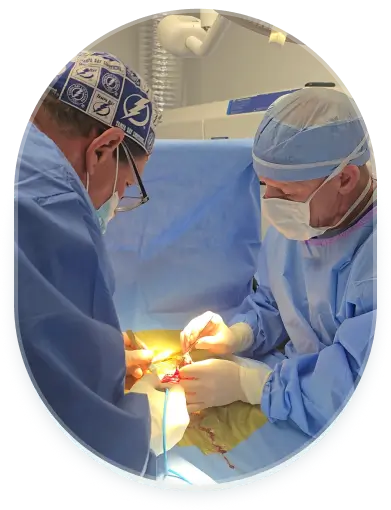
- Anesthesia and Prep: We usually perform the procedure with local anesthesia and sedation, or under general anesthesia. This ensures maximum comfort. The team preps the surgical site and administers preventative antibiotics.
- Incision and Release: The procedure involves making a small incision in the suprapubic area (the fatty pad above the base of the penis). Through this incision, we identify and release the suspensory ligament.
- Advancement and Closure: Here, we often create a V-Y or Z-plasty advancement flap to redistribute the skin, allowing it to lie smoothly over the newly advanced shaft. They then close the incision with sutures.
- Discharge: The surgery typically takes about 1 to 2 hours. After a brief period in recovery, most patients can go home the same day to begin their recovery.

Recovery Timeline & Traction Protocol
Your commitment to the post-operative plan is just as important as the surgery itself. While we’ll provide a personalized schedule, the recovery generally follows this timeline.
Days 0–3: Protect and Manage Swelling
Your main job is to rest. You can expect swelling (edema), bruising, and tightness near the incision. You’ll manage discomfort with the pain medication we prescribe and keep the dressings clean and dry. We encourage gentle walking, but you should avoid sitting upright for long periods.
Week 1–2: Wound Check & Light Mobility
You will typically have a follow-up appointment to check the incision’s healing. Your surgeon may remove sutures. Also, they may direct you to begin very gentle positional stretching. Most patients can resume desk work and light daily activities.
Weeks 2–4: Start Structured Traction
This is a critical phase. We will fit you with a penile traction device (a medical apparatus designed to apply gentle, consistent tension) and provide a detailed schedule. You’ll start with brief sessions and gradually build up the duration. Proper skin care is essential to prevent irritation.
Months 1–3: Consolidate Gains
During this period, you will continue to increase the daily traction duration to consolidate your results. We may also recommend scar massage or silicone sheeting to ensure the incision heals as smoothly as possible. Your surgical team may clear you for light exercise, but high-impact activities and sexual intercourse are still off-limits.
Months 3–6: Finalize Outcome
By this point, your results will be stabilizing. We’ll reassess your measurements and may adjust your traction plan. Our surgeons clear most patients to resume all activities, including sexual intercourse, around this time, once healing is complete.

Expected Results: Realistic Ranges & What Drives Them
Having realistic expectations is crucial. The most noticeable result of penile ligamentolysis is an increase in flaccid length. While modest gains in erect length can occur, they depend almost entirely on your diligence with the traction protocol.
Several factors influence your outcome:
- Your unique anatomy
- Strict compliance with the traction protocol
- Your body’s individual scarring and healing response
- Lifestyle factors (avoiding nicotine, maintaining a healthy weight)
The goal is a natural-looking increase in length that improves proportion and confidence, not achieving a specific number on a ruler.
Risks, Side Effects & How We Mitigate Them
Like any surgery, the procedure has risks. We do everything we can to minimize them. These include general surgical risks like bleeding, infection, and scarring. We understand that any list of risks can seem daunting, which is why our consultation process addresses every one of your concerns.
Specific aesthetic and functional considerations include:
- Lowered Erection Angle: You can expect a change in the angle of your erection as a normal outcome of releasing the supportive ligament. Most men adapt to this quickly with no functional issues.
- Palpable Scarring: You may feel some firmness under the skin where the surgeon released the ligament.
- Dissatisfaction: This risk is highest when expectations are unrealistic or you do not follow the traction protocol.
We reduce these risks through skilled surgical technique, comprehensive patient education, detailed traction coaching, and a clear list of red flags (such as fever or spreading redness) that require immediate attention.
Combining Length with Other Procedures
Many men interested in lengthening are also curious about enhancing girth.
- Length + Girth: While surgeons can sometimes perform these procedures in the same session, we often recommend staging them. Addressing them separately allows for greater surgical precision and simplifies the aftercare protocol, as each patient’s recovery needs differ.
- Length + Glans: We also typically stage glans (head) enhancement. The traction device you use after lengthening can interfere with glans healing.
Frequently Asked Questions
Here are answers to some of the most common questions we receive about this procedure.
How much length will I actually gain?
This is highly individual and depends on your anatomy and traction discipline. Gains are most significant in the flaccid state. Anyone promising a specific number of inches is not being transparent.
Will my erection angle definitely change?
Yes, you can expect a lower erection angle because of the procedure. It rarely affects sexual function.
When can I have sex or go back to the gym?
You must wait until your surgeon clears you fully. This often takes several weeks to a few months to ensure the tissues heal fully and the results are stable.
Do I really have to use the traction device?
Yes, 100%. We consider it mandatory to optimize and maintain your results. Ignoring traction will probably lead to scar tissue tethering the penis back toward the body, compromising the surgical gains.
Can the results of a penile ligamentolysis be reversed?
The ligament itself does not regrow once the surgeon releases it. However, if you ignore the traction protocol, scar tissue can effectively “reverse” the gains by pulling the penis back.
Taking the Next Step
If you are considering penile ligamentolysis, the most important next step is a direct conversation with an expert.
Schedule a confidential consultation with our board-certified surgeons to review your candidacy, create a personalized traction plan, and discuss the realistic outcomes you can expect from lengthening surgery.